ONE NAME, THIRTY-FOUR COUNTRIES
Before the last person who remembers is gone.
Families remember in fragments — a village name, a year that may be wrong, a photograph with no caption. Send yours while a living memory can still check them.
شعبان comes from the root ش ع ب: a people, and to branch out. The month was named for the weeks when the tribes dispersed. The name already describes what this archive is for.
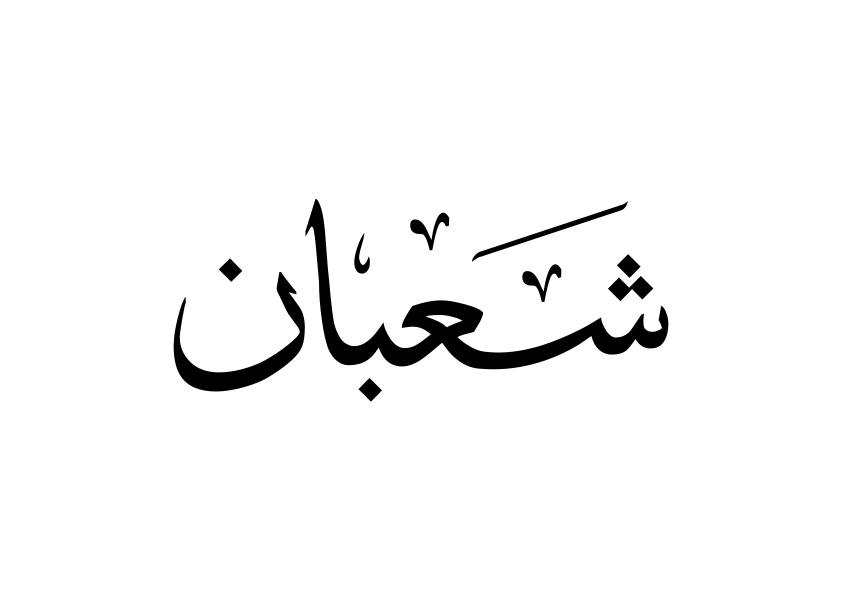
The month of Shaʿbān was named for the weeks when the tribes dispersed to find water. Not to be confused with بنو شيبان — a different root, a different tribe, and a false friend of English transliteration.
These numbers are aspirational — the register has not yet opened.
Nothing is too small
One name and one village is a real contribution. Certainty is not required; invention is not welcome.
You keep control
Files stay closed until you say otherwise, and any household can withdraw everything it sent, permanently.
Living people stay private
Anyone still living appears as initials only, until they claim their own record themselves.
THE ARCHIVE · RECENT ACCESSIONS
The shelf, as it grows.
Every accepted record is numbered, credited to its giver, and citable. The newest sit here, in public — this is what the archive is.

Sent home by the West-Africa branch — the spelling Chabane on the reverse.
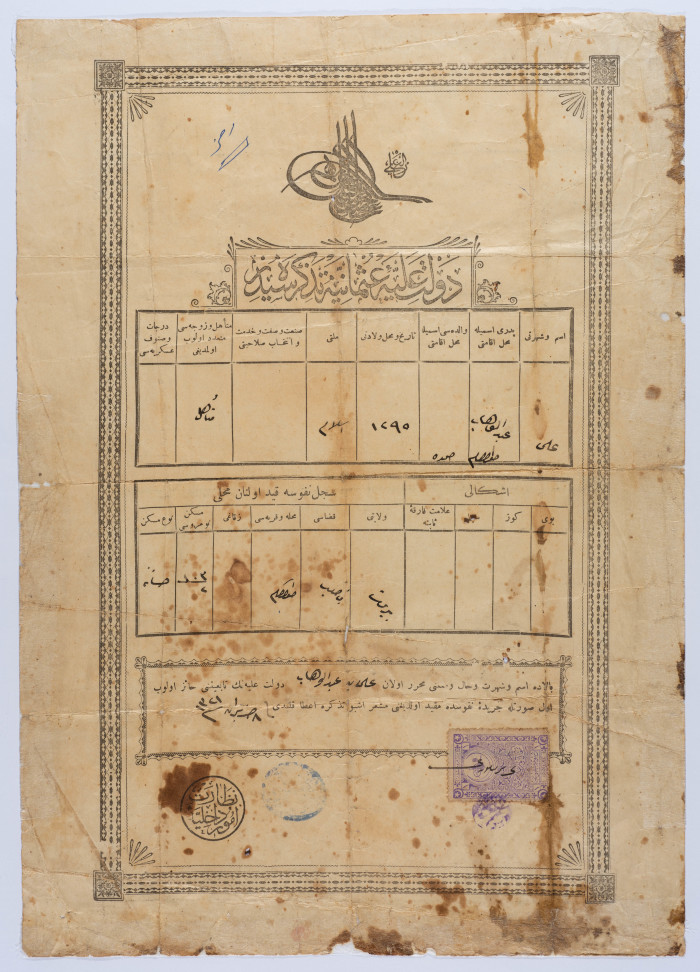
Named three generations and carried the Tripoli line back to roughly 1860.
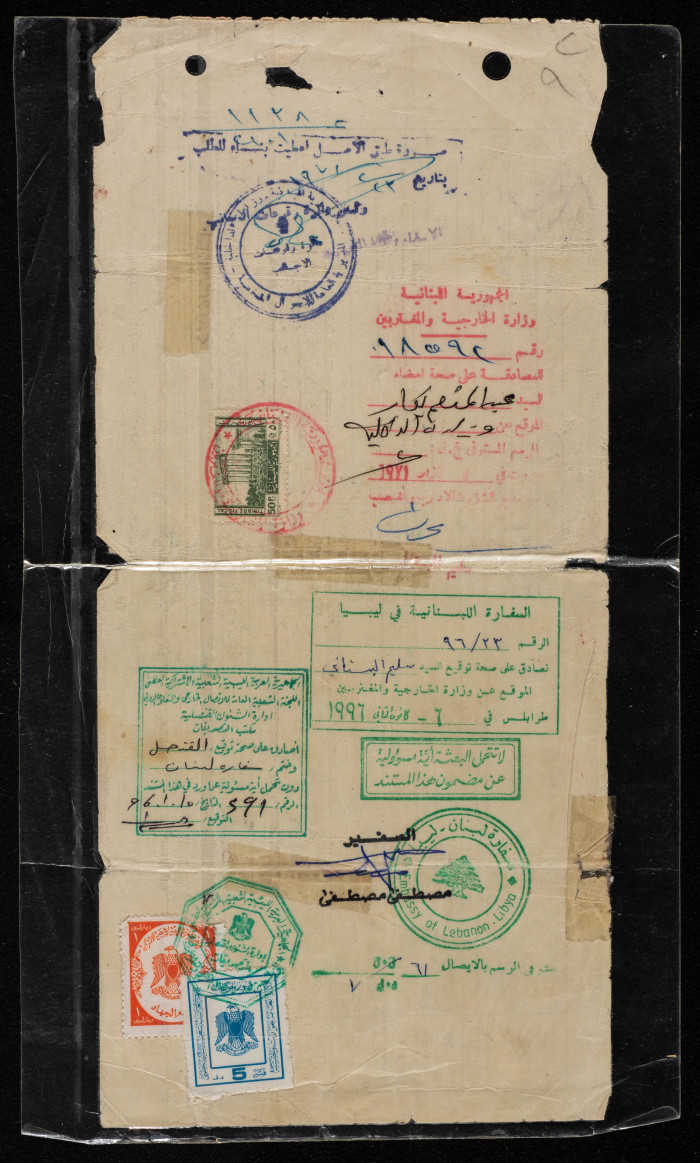
Ottoman-era; the marginal names await a reader of the old script.
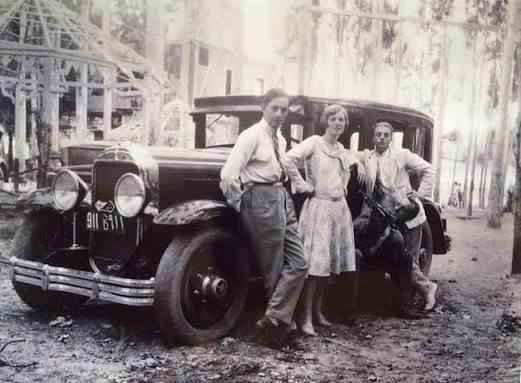
From the line of the brother who went to Argentina. Names on the reverse, partly legible.
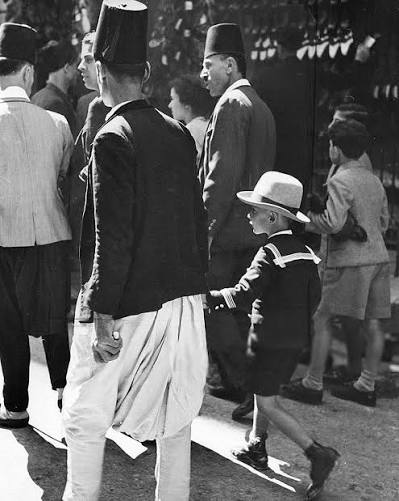
A boy in a sailor suit holding a hand in the crowd — identities sought.
Twenty-two minutes that attested eleven people, four previously only names.
Records about living people stay closed unless they open them. The full reading room — every record, searchable — follows as the shelf grows.
THE TREE · THE MEMBERS' ROOM
What opens when you sign in.
A nasab sheet without edges, drawn only from evidence: members pan across the generations, open any person to see how we know, and land on their own branch. Alongside it, your record of contribution — and in time, an address of your own.
Send a record. Your email becomes your key to the archive — no password, ever; a one-time link signs you in.
The Archivist joins your branch from the evidence — yours or others’. Every placement is vetted; the tree states only what its sources carry.
Sign in and land on your own branch. See every contribution you have made, and its standing, at any time.
Members with a reviewed record can hold you@shaabans.com — use it from any mail app; the settings arrive with the address.

Roots are drawn apart. Two lines are joined only when a living relative on each side confirms the link — until then the space between them stays empty.
Gaps are drawn as gaps: a dashed roundel where a child is mentioned but never named. The archive shows what it does not know.
A spouse who took the name is drawn beside, joined by a horizontal rule, never to a generation above.
Living people appear as initials until they claim their own record.
Send what your family remembers.
No account, no fee. Fill in only what you know — a single name is enough to open a branch.
The form below is finished, but it is not yet connected — nothing you type here is sent or stored.
Submissions open once the archive can receive documents safely: storage for the scans, a reviewed queue, and a real sender for the replies. Read it through, gather what you have, and ask to be told the day it opens.
TELL ME WHEN IT OPENSHow submissions are handled
Everything arrives in a queue, is read by a person, and is filed under the household that sent it.
FINDINGS SO FAR
The name is older than the family that carries it.
A working summary, kept in public and revised as submissions arrive. Where the record is thin, it says so.
The word means to branch out
شعبان comes from the Arabic root ش ع ب — shaʿb, a people or nation; shuʿūb, peoples; tashaʿʿaba, to branch out; shaʿaba, to divide into branches. The name of this archive already describes its subject.
The month came first, and it predates Islam
Shaʿbān is the eighth month of the lunar calendar, and the Arabs had named their months long before Islam. Rather than replace those names, Islam retained them — so the month is older than the faith, and far older than any family bearing it.
It was named for a dispersal
The traditional explanation is that in this month, after the sacred month of Rajab, the tribes scattered — to find water, to travel, to raid. The word carries that sense of people branching away in different directions. A site that exists to reconnect a dispersed family could hardly ask for a better origin.
It became a surname many times over
Shaʿbān was first a given name: a child born in the month might simply be called for it, much as a child born at Christmas was once called Noel. Generations later, son of Shaaban became the Shaabans — and this happened independently across the Arab world. That is why the honest answer to are we all related is: not necessarily.
بنو شيبان is a different name
The tribe Banu Shayban is frequently confused with ours, because English transliteration flattens the two. Different spelling, different root, different people. Worth stating plainly, because the error will otherwise be repeated in every family history that follows.
Where the name is concentrated today
Egypt, Syria, Lebanon, Jordan, Libya, Saudi Arabia and Iraq carry the greatest numbers, with substantial communities across Europe, the Americas, West Africa and Australia. The transliteration usually tells you which country received a branch: Chaaban in France, Shaaban in the United States, Sha'ban and Shaban elsewhere.
WHAT WE DO NOT KNOW
How many distinct Shaaban lines exist. We have no basis for a number, and will not invent one.
Whether any two of the branches in this archive share an ancestor. Only documents and living memory can answer that.
Whether a Banu Shaaban tribe ever existed. No evidence has been found, and absence of evidence is recorded as such.
Whether any branch kept a seal, a trade, or a written genealogy. If yours did, that is the single most valuable thing you could send.
If you know something here to be wrong, or thin, or missing — say so. This page is a draft in public, and corrections are credited to the household that made them.
CORRECT THE RECORDNOTICES
Be told when the archive changes.
The archive grows slowly and unpredictably — a household in São Paulo files a letter, and a branch that had gone quiet for eighty years moves. Ask to be told when it does.
SPOUSES AND MARRIED NAMES
Carrying the name is not the same as descending from it.
A spouse who took the name is a Shaaban in every ordinary sense, and belongs in the archive — but not on the descent line, or the tree stops being true. So the record states how each person carries the name, and the diagram draws it differently.
OPENING SOON
you@shaabans.com
An address that says where you are from before you have written a word. Anyone who keeps a record in the archive can hold a mailbox on the family domain.
WHO QUALIFIES
How a person qualifies for an address.
Have a record in the archive
One documented household, filed and reviewed — yours or the one you belong to. Contributing is the qualification; there is no other membership.
Claim it as yourself
The address goes to a person, not a branch. You confirm your own identity by email, and living-person details stay closed unless you open them.
Carry the name, however you came by it
Born to it, married into it, or through your mother — all equally eligible. Descent decides where you sit on the sheet, not whether you can hold an address.
Keep the record current
An address stays active while its record does. If a household withdraws its submissions, the mailbox is retired with them — and you keep a copy of everything you sent.
Addresses are not sold to non-family, and no address is issued from a submission that has not been reviewed. Where demand exceeds what the domain can host, the earliest filed record is served first.